Thinking about a home behind the gates in Summerlin? You are not alone. Many buyers love the privacy, control, and consistency that guard‑gated neighborhoods promise, especially in luxury enclaves like The Ridges. Still, the daily experience is more than a gatehouse and a smile. In this guide, you will learn how guard gates actually work in Las Vegas, what HOAs cover, where the costs come from, and how to weigh the lifestyle tradeoffs so you can decide with confidence. Let’s dive in.
Guard‑gated living in Summerlin
Summerlin sits on the west side of the Las Vegas Valley and is known for thoughtful planning, parks, trails, and village‑style neighborhoods. Within this master plan, several higher‑end enclaves use guard gates and private amenities to deliver a distinct lifestyle.
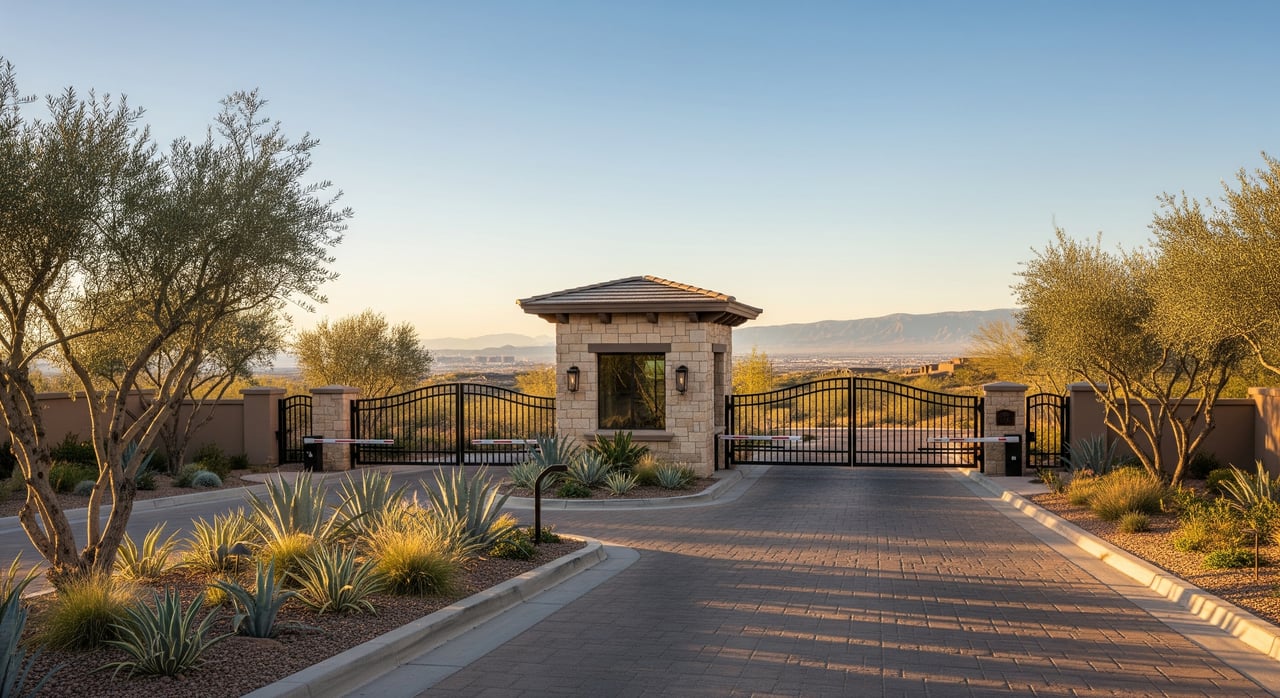
The Ridges is a common reference point. It is often described in local materials as an ultra‑luxury, security‑focused area with custom and estate homes, strong design guidelines, and elevated HOA and amenity costs compared to typical neighborhoods. Treat it as a representative case for what premium guard‑gated living can look like inside Summerlin.
Across Summerlin, gated neighborhoods vary a lot. Some lean into privacy and architecture oversight, others add club or wellness amenities. Your experience depends on each community’s staffing, technology, and rules.
How gates and access actually work
Guard gates are about access control and accountability. The details matter because they shape daily life for you and your guests.
Staffing and monitoring
- Full‑time staffed gatehouses often operate 24/7. Personnel check credentials, log visitors, and coordinate entry.
- Some communities mix onsite staff with remote monitoring during off‑hours. Professional security vendors are common in luxury enclaves.
- Volunteer‑run models are rare in higher‑end neighborhoods.
Resident access and credentials
- Common tools include RFID or transponder stickers, keycards, mobile app credentials, PIN codes, and license‑plate recognition.
- You typically manage your guest list through an app, portal, or a call to the gate.
- Long‑term vendors and contractors may require pre‑registration and proof of insurance, bonding, or background checks if the HOA requires them.
Guests, deliveries, and vendors
- Visitors are logged and given temporary passes. Some communities print passes with time limits or plate numbers.
- Parcel delivery policies vary. Many allow standard delivery to your home, while others centralize deliveries or require you to meet the driver.
- Large moves and furniture deliveries often require advance scheduling. Oversized trucks or specialty vendors may need an escort.
- Ride‑share drivers and short‑term workers usually follow specific entry rules that you or your manager pre‑authorize.
Emergency access and privacy
- Gates must allow rapid entry for first responders. Most systems use fail‑safe or rapid‑release mechanisms and coordinate with local fire and EMS using key boxes or override codes.
- Communities often maintain camera systems, license‑plate capture, and visitor logs. Policies for data retention and resident access are set by the HOA and privacy rules.
Before you buy, ask for the community’s gate policy, staffing hours, visitor process, technology used, and written emergency access procedures.
HOA structure, fees, and rules
In Summerlin, most guard‑gated neighborhoods sit inside a larger master plan. You will likely interact with more than one association.
Master vs neighborhood HOAs
- The Summerlin master association typically maintains community‑wide assets such as parks, trails, and streetscapes.
- Your guard‑gated neighborhood HOA handles gates, private amenities, and stricter architectural standards.
- Expect multiple dues lines: master association fees plus neighborhood HOA fees. Private clubs, golf, or social memberships may be separate.
Fee types and cost drivers
- Common fees include monthly or quarterly dues, one‑time capital contributions or transfer fees at sale, and occasional special assessments.
- Costs trend higher in gated communities because of 24/7 staffing, private roads and landscaping, enhanced security technology, and larger reserve needs for assets like gates and clubhouses.
- Actual amounts vary. Always review the current budget and the most recent reserve study before you rely on any estimates.
Rules, CC&Rs, and design review
- CC&Rs set the playbook for architecture, landscaping, exterior maintenance, noise, parking, and visible storage.
- Luxury gated neighborhoods often run a strict architectural review for exterior changes, pools, and solar. Approval timelines and conditions can affect your renovation plans.
Rental and short‑term rental policies
- Many guard‑gated communities restrict or ban short‑term rentals. Others set minimum lease terms or caps.
- If rental flexibility is important to you, confirm the exact policy with the HOA before you write an offer.
Legal framework in Nevada
- Nevada’s Planned Communities Law, found in NRS Chapter 116, sets rules for HOA powers, budgets, disclosures, reserves, and record access. Your resale package should include required documents and financials.
Amenities and lifestyle tradeoffs
Guard‑gated living is about more than a gatehouse. It is a full lifestyle choice with clear upsides and fair tradeoffs.
What you gain
- A feeling of privacy and exclusivity, plus controlled access that discourages casual traffic.
- Consistent curb appeal due to stronger exterior standards and community maintenance.
- Private amenities that may include parks and trails, a clubhouse, pools, fitness centers, courts, concierge‑style services, or access to private golf.
What you trade
- Higher carrying costs from HOA dues, security contracts, and reserves. Special assessments are possible if reserves run short.
- More rules. Design guidelines, landscaping standards, and limits on exterior changes can slow or shape your projects.
- Visitor and vendor friction. Expect to plan ahead for guest lists, deliveries, and move‑ins.
Resale, insurance, and financing notes
- Marketability depends on the buyer pool. Many luxury buyers seek guard‑gated privacy and may pay a premium within the local market. Higher fees and rental limits can narrow demand for some segments.
- Insurance outcomes vary. Some insurers may consider security measures when pricing policies. Fire risk and emergency access coordination can also affect premiums.
- Financing for single‑family homes in gated neighborhoods is usually straightforward. Private roads, unusual easements, or weak HOA financials can add underwriting steps. Attached product has additional project approval requirements.
Buyer checklist for Summerlin gates
Before you commit, assemble a clear picture of operations, finances, and lifestyle fit.
Documents to request:
- CC&Rs, bylaws, and rules and regulations
- Current budget and financials, including reserve fund balance
- Most recent reserve study
- Insurance certificates and summaries
- Meeting minutes for the past 12 months
- Security vendor contract and gate policy, including visitor management and delivery rules
- Any moving procedures and oversized vehicle guidelines
- Disclosure of pending litigation or planned capital projects
Questions to ask:
- What do HOA fees cover, and when were they last increased?
- Is security funded through the HOA budget or billed separately?
- What is the reserve balance, and have there been special assessments in the last 5 years?
- How long does architectural review take, and what conditions are typical for pools or solar?
- Are short‑term rentals prohibited or limited by minimum leases or caps?
- Are gate logs or recordings available to residents upon request?
- Who maintains private roads, and how are emergency repairs handled?
Site visit tips:
- Visit on different days and times to gauge gate wait times, traffic, and noise.
- Test the guest experience by pre‑authorizing a friend for a pickup or delivery.
- Tour amenities, ask about reservation policies and peak usage, and confirm any membership requirements.
- Speak with residents about fee trends, enforcement, and management responsiveness when possible.
The Ridges as a reference point
If you are evaluating The Ridges, expect elevated design standards, strong architectural oversight, and higher HOA and amenity costs than average neighborhoods in Summerlin. Treat it as a benchmark for premium, security‑focused living with private community offerings. Because policies and fees change, do not rely on general assumptions. Ask the HOA or management company for the full disclosure packet, including budgets, reserve studies, rules, and any club membership requirements.
Final thoughts and next steps
Guard‑gated living in Summerlin can be a smart fit if you value privacy, controlled access, and consistent curb appeal. The tradeoffs, mostly cost and rules, are easy to manage when you know them upfront. Focus on the specifics that affect your daily life, from guest entry to design review timelines and reserve strength.
If you want a clear read on which Summerlin gates match your lifestyle and budget, connect with senior‑level local representation. For discreet guidance, curated options, and a smooth purchase process, reach out to Russell Arnold for a private consultation.
FAQs
What is a guard‑gated community in Las Vegas?
- A neighborhood with staffed or monitored gates, controlled entry for residents and guests, and HOA rules that manage access, standards, and community maintenance.
How much are HOA fees in Summerlin guard‑gated areas?
- Fees vary by community and services. Expect higher dues where gates are staffed 24/7, amenities are robust, and reserves cover costly assets like roads and clubhouses.
How do visitors and deliveries enter a gated neighborhood?
- You usually pre‑authorize guests through an app, portal, or call to the gate. Visitors are logged, delivery rules vary, and large moves often require advance scheduling.
Are short‑term rentals allowed behind the gates?
- Many guard‑gated communities restrict or ban short‑term rentals, while others set minimum lease terms or caps. Always confirm the current policy with the HOA.
Do gates slow emergency response times in Clark County?
- Communities coordinate with fire and EMS using fail‑safe mechanisms and override systems. Ask for documented emergency access procedures and recent testing.
Will a guard gate lower my home insurance premium?
- Some insurers consider security measures, but results vary. Fire risk, emergency access, and overall property characteristics also influence premiums.